

Control the Cut. Control the Outcome.
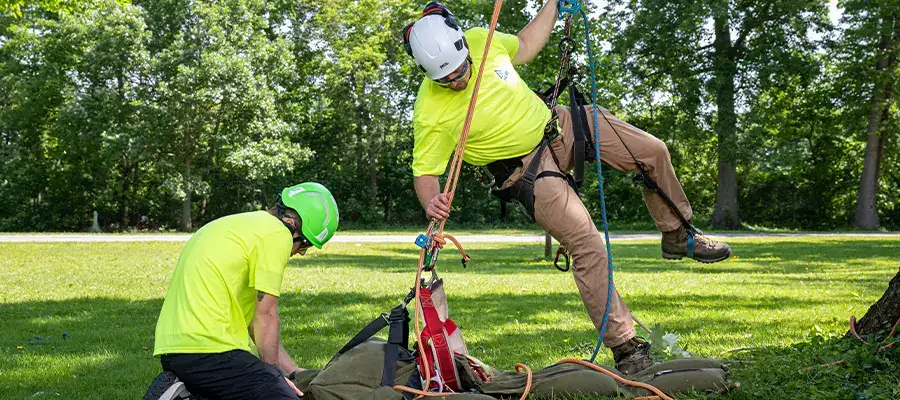
When conducting pruning operations, even for small branches, the best practice is to remove branches in a “total branch control” manner using ropes or by reducing the size of the branch you are cutting into a much smaller piece. Maintaining control of the branch from the moment the cut begins until it reaches the ground is essential to preventing unintended contact with people, property, or other parts of the tree.
In a weekly kick-off safety meeting, a utility noted a situation that recently occurred where a three-man crew was working overhang. The trimmer was using a hand saw so he could cut with one hand while controlling the limb with the other. This part of the operation went well and was performed safely, demonstrating good awareness and control during the cutting process. However, once the cut was complete and the limb was released, the situation changed.
When the trimmer dropped the limb, it struck a stub that had been left on the tree from previous work. The trimmer reported that they had intentionally left the stub, along with others, with the plan to return and clean them up later. While this may seem like an efficient approach in the moment, it introduced an unnecessary hazard that ultimately led to an avoidable incident.
Section 5.3.6 of the American National Standards Institute (ANSI) A300 Pruning Standard states that “Tree branches shall be removed in such a manner so as not to cause damage to other parts of the tree or to other plants or property. Branches too large to support with one hand shall be precut to avoid splitting of the wood or tearing of the bark. Where necessary, ropes or other equipment shall be used to lower large branches or portions of branches to the ground.”
This situation could have been avoided if previous pruning cuts had been completed before proceeding to the next branch, eliminating the presence of stubs that could interfere with falling limbs. Additionally, using ropes or other lowering techniques to maintain total branch control would have helped guide the limb safely to the ground, preventing contact with the stub altogether.
It is important to recognize that even small deviations from best practices, such as leaving stubs behind temporarily or allowing limbs to free-fall, can introduce compounding risks. Each cut and each decision made in the tree should support the overall goal of maintaining control and minimizing hazards.
Taking the extra time to finish each cut properly and ensuring that every branch is controlled throughout its descent reinforces a culture of safety and professionalism. Total branch control is not just a best practice; it is a critical component of safe and effective pruning operations.
Strengthen your team’s approach to safe, standards-aligned work with ACRT Arborist Training.
Related Articles
Exploring Urban Trees and Their Benefits to Wildlife By Matt Knull, training instructor, ACRT Arborist Training Many arborists and people, in general, understand the benefits that trees provide in forests and urban areas. They produce clean air, and water, prevent stormwater runoff, and a cooler microclimate in the area under their canopy. It’s also easy[...]
Read More